
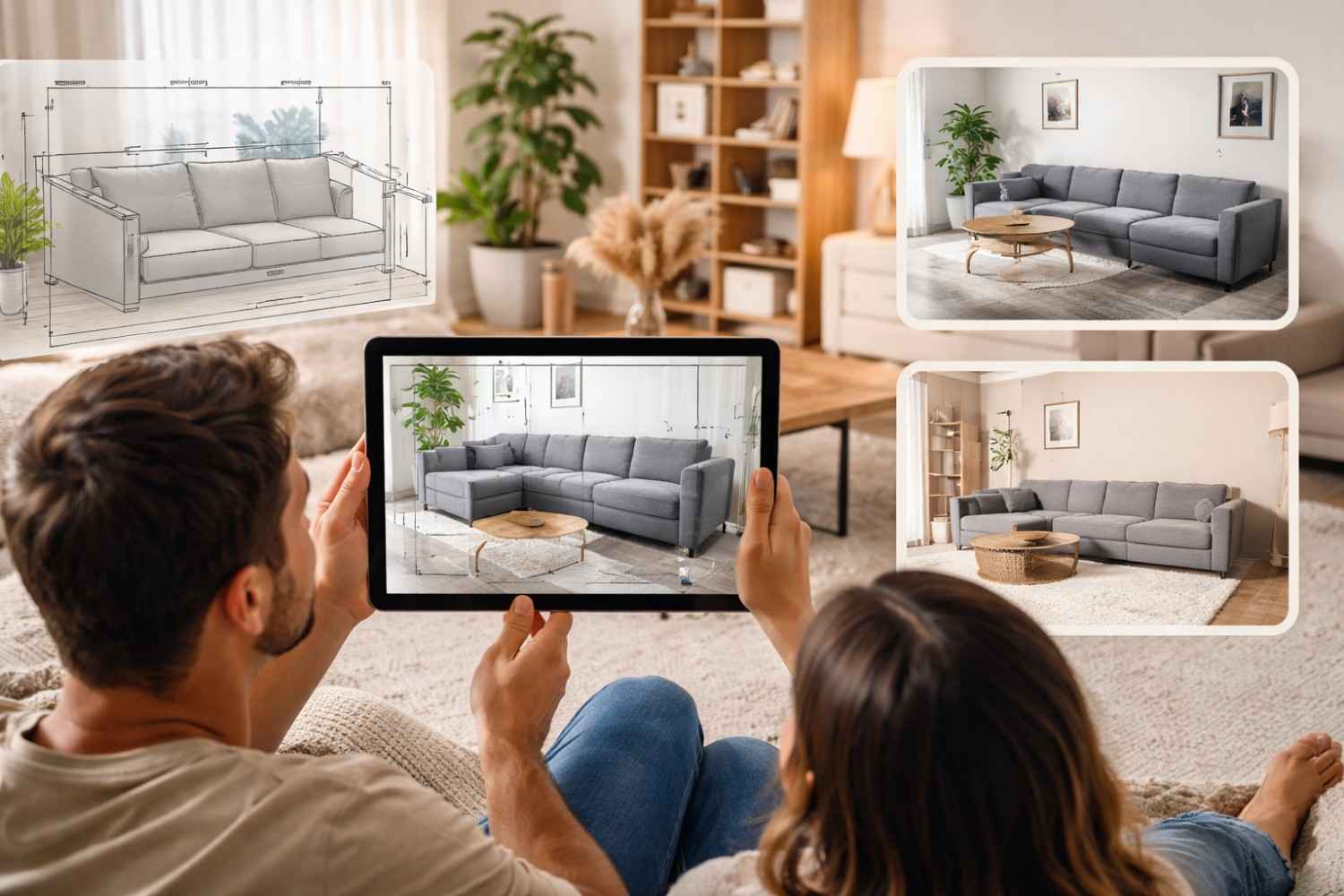
Online furniture shopping relies heavily on visuals to influence purchase decisions. While product images and descriptions provide necessary details, they rarely help buyers understand how furniture fits within actual living spaces. This lack of physical context can make it difficult to judge proportion, leading to mismatched expectations.
Physical constraints in furniture retail highlight why scale accuracy is vital for online platforms. Without the ability to walk around a product or see it near familiar objects, users are left to imagine its presence in a room. To see why this matters, it’s worth breaking down how visual scale shapes the online buying experience.
Why Accurate Visual Scale Builds Buyer Confidence
A visual representation that reflects real-world scale helps bridge the gap between digital product displays and physical spaces. Photos that show furniture next to standard objects, like doorways or tables, offer context people can relate to instantly. That context builds clarity, especially when customers can’t see the product in person.
Uncertainty sometimes grows when images isolate furniture in blank or heavily edited settings. While visually clean, those setups give no size comparison. Buyers depend on cues to gauge presence, so including household items in product images can reduce confusion. The more grounded the visuals, the easier it is to understand what fits.
How Realistic Scale Enhances Digital Showroom Experiences
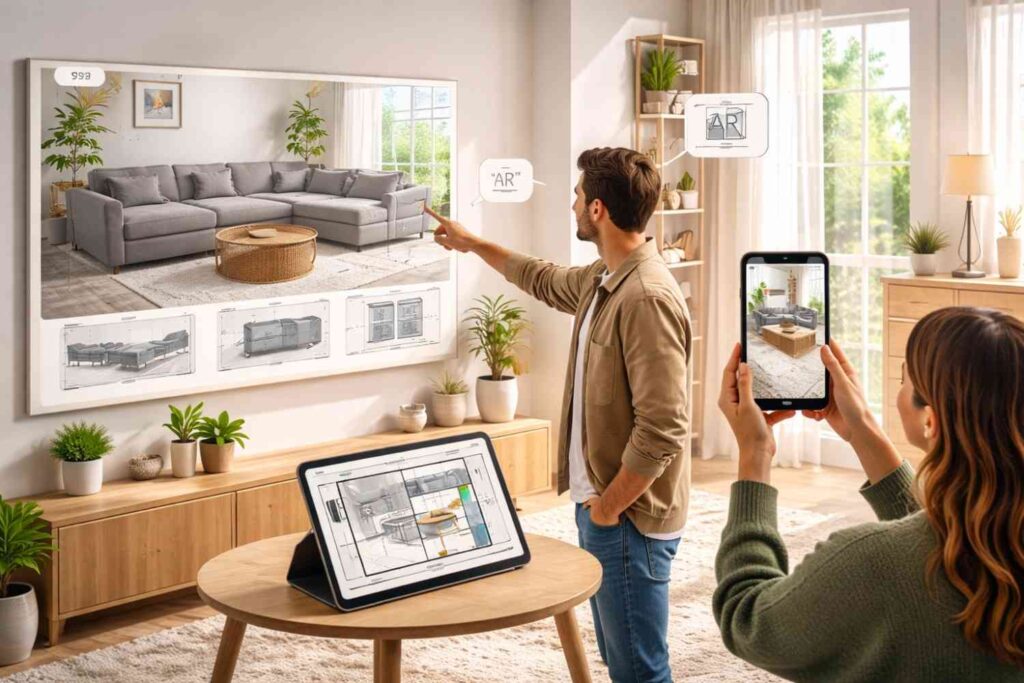
Providing scale-accurate images and interactive tools can enrich the online showroom. A few key methods include:
- Placing furniture in rooms with standard-sized items
- Adding 3D or AR previews for scale accuracy
- Displaying layout examples with clear measurements
These approaches can guide shoppers toward informed selections. Standard product dimensions alone don’t always solve the problem. People process visual scales faster than numbers. Adding scalable reference points or adjustable previews can improve overall decision-making, particularly for larger pieces like sofas, beds, and tables.
Role of Visual Scale in Purchase Satisfaction
Scale accuracy can influence satisfaction before delivery. If buyers understand a product’s actual size, they’re more likely to feel comfortable moving forward with a purchase. That comfort sometimes leads to fewer product exchanges, as selections align better with room needs and existing furniture.
A realistic approach to size representation also helps manage expectations. When visuals match reality, people are less likely to feel surprised once an item arrives. Product satisfaction increases when items fit as imagined, which supports smoother delivery outcomes and reduces re-selection time.
Why Retailers Should Prioritize Visual Scale
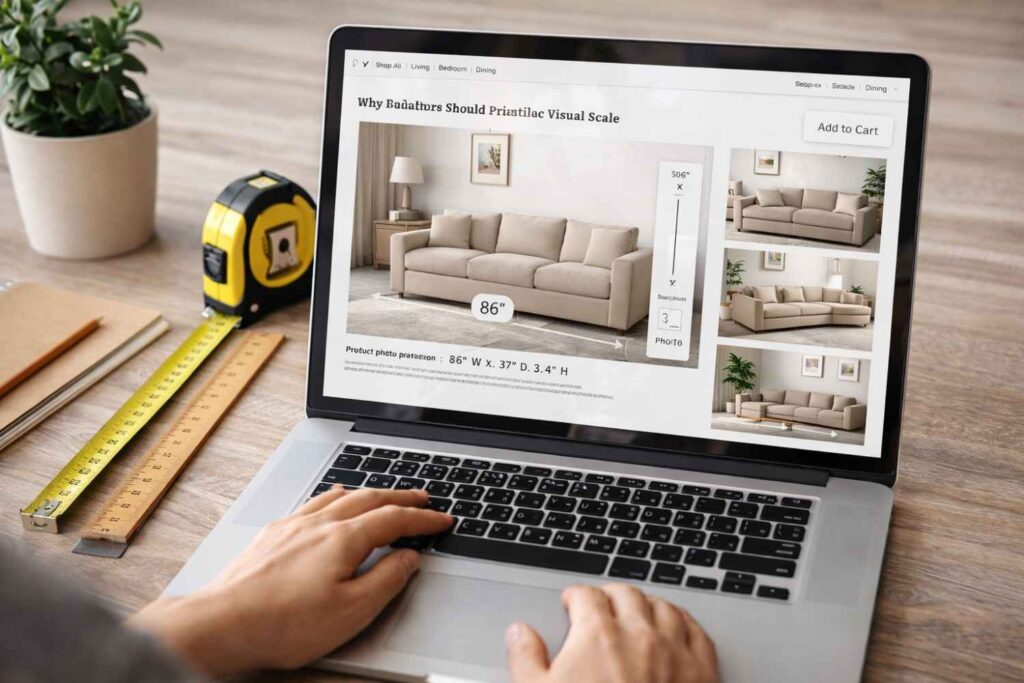
Physical constraints in furniture retail continue to make visual accuracy essential for online listings. Without the ability to view items in-store, buyers depend on visuals to reflect scale truthfully. Realistic imagery not only informs but supports better furniture planning in tight or unique layouts.
Reliable size perception adds meaning to photos, strengthening customer understanding across product categories. With better insight into actual fit, shoppers can align preferences with room sizes more easily. An accurate scale is not just a feature; it is a critical part of a helpful and dependable online experience.
Where Design Meets Function With Purposeful Insight
Access to well-edited, design-focused content can improve how people choose furniture online. Gathering information from leading lifestyle platforms delivers precise guidance on space planning, furniture scale, and design alignment. Its coverage connects layout decisions with real-world living, helping readers see how different elements fit together.
Each feature is built around clarity and structure. Readers can explore topics like proportion, room flow, and visual balance with examples that mirror real environments. For those looking to improve how they shop for or style furniture, this platform offers a strong foundation worth exploring further.